A problematic new end-of-life medical form is rapidly gaining ascendency in U.S. healthcare. It is called the "POLST" document. The acronym stands forPhysician Orders for Life-Sustaining Treatment. Click here to see an example of a standard POLST document.
The document consolidates on a single form provisions formerly dispersed over several documents: it acts as a living will specifying the scope of medical interventions a patient wishes in case of incapacitation; it makes specific provision for a do-not-resuscitate order (DNR); it has a box to check in the event a patient wishes to refuse treatment with antibiotics; and it allows a patient to designate a proxy decision maker.
Similar to other advanced directives, patients complete the POLST form when their capacities are in tact and the document becomes effective when consciousness is compromised. But different from older-type directives, the POLST document has provision for the signature of a physician (or physician assistant). This gives the designations on the document the force of an actionable medical order. Culture of Life
Showing posts with label End-of-life Planning. Show all posts
Showing posts with label End-of-life Planning. Show all posts
Thursday, September 8, 2011


Tuesday, May 17, 2011
'Regrets of the dying should influence end of life care'
'Regrets of the dying should influence end of life care' | Practice | Nursing Times: Maybe you are already familiar with the online article: “Top five regrets of the dying.” Written by Australian palliative care worker Bronnie Ware, it documents the most commonly expressed regrets of the dying. The article summarises many conversations she had with dying patients into five common areas of regret, namely:
“I wish I’d had the courage to live a life true to myself, not the life others expected of me.”
“I wish I hadn’t worked so hard.”
“I wish I’d had the courage to express my feelings.”
“I wish I had stayed in touch with my friends.”
“I wish that I had let myself be happier.”
“I wish I’d had the courage to live a life true to myself, not the life others expected of me.”
“I wish I hadn’t worked so hard.”
“I wish I’d had the courage to express my feelings.”
“I wish I had stayed in touch with my friends.”
“I wish that I had let myself be happier.”
It could be viewed as a rather sad piece about death and regret. But there is a subtext that is inspiring and potentially life changing.
Monday, May 9, 2011
Dutch group offers Life Wish Declarations
Care for Life (NPV) of the Netherlands is an Evangelical group with more than 73,000 members which makes available Life Wish Declarations (Levenswensverklaring) which specify that the patient wants treatment to be continued if he is no longer able to express his wishes.
Tuesday, March 29, 2011
Not all advance directives created equal
Some – particularly of the short form variety – push signers toward refusing care. Others, take the decisions out of the hands of family. . . . Living wills allow the patient state ahead of time what is not wanted and what is. But that can be problematic. The precise circumstances often cannot be known in advance. And it is up to the doctor to determine when the living will takes effect. . . . That can create a conflict of interest between patient and doctor, or require the doctor to make assumptions about what a patient might or might not want if circumstance faced is not directly mentioned in the living will. . . .
The best advance directive is the durable power of attorney for health care (as it is called in CA–it may have a different name in your jurisdiction). It allows the signer to name a known and trusted person to make decisions in times of incapacity, as well as to give general directions about future care. It also allows the designated person to obtain medical records–which can be difficult under HIPPA privacy laws. With a durable power, there is no need to anticipate every exigency, merely find a trusted person capable of making decisions according to your own values. Secondhand Smoke
Baptists for Life has a Protective Medical Decisions Declaration that helps signers guide their proxy decision-makers. It is available for download free of charge and is made to accompany Durable Power of Attorney for Health Care forms for all fifty states available for download free of charge from National Right to Life.
The best advance directive is the durable power of attorney for health care (as it is called in CA–it may have a different name in your jurisdiction). It allows the signer to name a known and trusted person to make decisions in times of incapacity, as well as to give general directions about future care. It also allows the designated person to obtain medical records–which can be difficult under HIPPA privacy laws. With a durable power, there is no need to anticipate every exigency, merely find a trusted person capable of making decisions according to your own values. Secondhand Smoke
Baptists for Life has a Protective Medical Decisions Declaration that helps signers guide their proxy decision-makers. It is available for download free of charge and is made to accompany Durable Power of Attorney for Health Care forms for all fifty states available for download free of charge from National Right to Life.
Wednesday, March 16, 2011
Baby Joseph Will Have Tracheotomy by the End of the Week
Baby Joseph Will Have Tracheotomy by the End of the Week | LifeNews.com: A team of specialists at the Catholic hospital have evaluated Joseph, who was “in serious but stable condition,” on arrival from London, Ontario Health Sciences Centre. In a statement released yesterday afternoon, Dr. Robert Wilmott said Joseph “likely will have a tracheotomy performed by the end of this week to facilitate his transition to a skilled nursing facility.”
Editor: I thought the idea was to enable Joseph to go home.
Tuesday, March 15, 2011
Nurses Help Patients and Families Confront Ethical Issues
Research being done at the UCLA School of Nursing is showing that nurses can have a critical impact on the many ethical issues patients and their caregivers encounter in the growingly complex world of medicine. “Nurses are in a unique position to work within healthcare teams and influence the course of troubling ethical situations by being sensitive to early indicators of potentially difficult ethical questions,” said Carol Pavlish, Ph.D., RN, assistant professor at the UCLA School of Nursing. “Initiating early ethics consultation and intervention can greatly diminish the potential for patient and family suffering as well as for nurses’ moral distress.”
“Our study showed that unless ethically challenging situations are managed effectively, they often escalate into more complicated issues that erode confidence and result in compromised care,” said Pavlish. “Nurses are in a key position to recognize vulnerable patients, advocate on their behalf, and serve as an important liaison between the patient and other members of the caregiving team.” Business Wire
“Our study showed that unless ethically challenging situations are managed effectively, they often escalate into more complicated issues that erode confidence and result in compromised care,” said Pavlish. “Nurses are in a key position to recognize vulnerable patients, advocate on their behalf, and serve as an important liaison between the patient and other members of the caregiving team.” Business Wire
Monday, March 14, 2011
Get a Grip on the Grammer of Medical Decision-Making
Are you perplexed about how to make moral medical decisions? You are not alone. The distinctions between optional medical treatment and ordinary care, between letting a person die naturally and intentionally causing a person's death have become blurred. Confusion abounds. This confusion has been sown by "right to die" organizations determined to make euthanasia acceptable and legal. A very real war is being waged between the culture of life and the culture of death. A person's first line of defense in this culture war is a firm grasp of the moral principles that apply when making medical decisions. HLA
Resource: Imposed Death
Articles include:
- Living Wills: Vital... or Deadly?
- What About Pain Control?
- Not Dead Yet: Support to Live, Not to Die
- Thirsty? Too Bad.
- Hospice Care: The Good, the Bad, and the Ugly
- "Persistent Vegetative State"
- Imposed Death in the U.S.
- Are You Sure You'd Never Want to be Hooked Up to a Machine?
Download Your Copy Now
Excerpts of hospital's statement about transfer of Baby Joseph
"Despite the strongest possible medical advice to the contrary from medical experts in Canada, the United States and Europe, the parents of Baby Joseph Maraachli have accepted an offer to transfer him by air to the faith-based Cardinal Glennon Children’s Hospital in St. Louis, Missouri.
"His parents exercised their legal right to have him discharged after LHSC exhausted all its legal options in attempting to deliver to Baby Joseph the best possible and most appropriate medical care, given the progressive, fatal neurodegenerative disease from which he suffers. An LHSC medical team transported Baby Joseph to London International Airport in the presence of his father.
"The medical judgments about Baby Joseph made by LHSC physicians remain unchallenged by any credible medical or legal source. Those judgments remain supported by 9 pediatric specialists in Ontario as well as pediatric specialists in the U.S. and Europe, Ontario’s Consent and Capacity Board, and the Superior Court of Ontario, as being in the best interests of Baby Joseph.
"LHSC physicians and staff were targeted by well-organized social media feeds and directly via email with personal threats, threats to their families, innuendoes and falsehoods. The threats, many of which emanated from members of U.S.-based groups, have been passed along to LHSC lawyers who will liaise with police where appropriate."
"His parents exercised their legal right to have him discharged after LHSC exhausted all its legal options in attempting to deliver to Baby Joseph the best possible and most appropriate medical care, given the progressive, fatal neurodegenerative disease from which he suffers. An LHSC medical team transported Baby Joseph to London International Airport in the presence of his father.
"The medical judgments about Baby Joseph made by LHSC physicians remain unchallenged by any credible medical or legal source. Those judgments remain supported by 9 pediatric specialists in Ontario as well as pediatric specialists in the U.S. and Europe, Ontario’s Consent and Capacity Board, and the Superior Court of Ontario, as being in the best interests of Baby Joseph.
"LHSC physicians and staff were targeted by well-organized social media feeds and directly via email with personal threats, threats to their families, innuendoes and falsehoods. The threats, many of which emanated from members of U.S.-based groups, have been passed along to LHSC lawyers who will liaise with police where appropriate."
Editor: Any threats, innuendoes, or falsehoods concerning the hospital's actions are regrettable. This blog post explains the family's side. Some articles have cast their endeavor as an attempt to save Baby Joseph's life at all cost. This is not the case. Another article tried to posit the removal of Baby Joseph from the hospital as "covert." According to the above, that may not be an accurate statement.
Baby Joseph moved to US hospital
The baby who was hours from being pulled off life support at his Canadian hospital has been rescued by the national director of Priests for Life and taken to the U.S. for treatment. Thirteen-month-old Joseph Maraachli, who is currently kept alive by a respirator was on his way to SSM Cardinal Glennon Children's Medical Center in St. Louis, Mo., a non-profit health-care facility open to all children in need of medical care.He has been at the Children’s Hospital in London, Ontario, since the fall. FoxNews
Feeding tube restored to immigrant woman
A Rwandan immigrant woman and survivor of the horrors of the 1994 genocide who had her feeding tube removed because a U.S. Catholic-affiliated hospital deemed her care too expensive, apparently will not die of starvation and dehydration thanks to a court order and the efforts of her children. LifeSiteNews
Friday, March 4, 2011
Baby Joseph case affects us all
The baby Joseph case concerns the question of who has the right to decide what is in the best interests of baby Joseph. . . . The issue is, who has the right to decide? Does the hospital and doctor, or does the family have the right to decide on how to care for their terminally ill child?
This case is different from most of the similar cases because it is not about a family requesting treatment that is futile, burdensome or extra-ordinary. The family is not asking for a portable ventilator to be set up in their home, even though this would be a reasonable option. They are not asking for in-home nursing care to be provided. They did not ask for experimental treatment plans. The family only asked to bring Joseph home; but to do so would require Joseph to be capable of breathing on his own. This is why they requested that a tracheotomy be done. A tracheotomy is not a difficult procedure; it is not futile, burdensome or extra-ordinary.
Some people have suggested that to withdraw the ventilator from baby Joseph would constitute an act of euthanasia. This is not true.
Euthanasia is an action or omission that directly and intentionally causes the death of another person with the intention of relieving suffering. Euthanasia is a form of homicide.
If the ventilator is withdrawn from baby Joseph, he is likely to die, but he may survive. If he dies, his death would be caused by his medical condition and not because of a direct and intentional action or omission. Even if the intention is to cause his death, the reality is that his death is not direct because it is caused by his medical condition and therefore is not euthanasia. Alex Schadenberg
This case is different from most of the similar cases because it is not about a family requesting treatment that is futile, burdensome or extra-ordinary. The family is not asking for a portable ventilator to be set up in their home, even though this would be a reasonable option. They are not asking for in-home nursing care to be provided. They did not ask for experimental treatment plans. The family only asked to bring Joseph home; but to do so would require Joseph to be capable of breathing on his own. This is why they requested that a tracheotomy be done. A tracheotomy is not a difficult procedure; it is not futile, burdensome or extra-ordinary.
Some people have suggested that to withdraw the ventilator from baby Joseph would constitute an act of euthanasia. This is not true.
Euthanasia is an action or omission that directly and intentionally causes the death of another person with the intention of relieving suffering. Euthanasia is a form of homicide.
If the ventilator is withdrawn from baby Joseph, he is likely to die, but he may survive. If he dies, his death would be caused by his medical condition and not because of a direct and intentional action or omission. Even if the intention is to cause his death, the reality is that his death is not direct because it is caused by his medical condition and therefore is not euthanasia. Alex Schadenberg
Tuesday, March 1, 2011
Baby Joseph can go home to die, but without tracheotomy; unacceptable to family
Joseph Maraachli's physicians are willing to send him home, but with an important catch: they still refuse to perform the tracheostomy that allowed a sibling of Joseph’s who had a similar condition to live another six months at home. Instead they will simply return Joseph home, and then remove his ventilator, after which he will almost certainly die within a matter of minutes. This solution is unacceptable to the family.
“They need to do a tracheostomy,” said Dr. Paul Byrne, an Ohio neonatologist with nearly five decades of experience. “If the baby is stable otherwise, and has a tracheostomy, then the baby can be taken care of at home.”

Joseph Maraachli
London Health Sciences Centre defended their refusal to perform the tracheostomy, calling the procedure, which involves inserting a breathing tube through a tiny slit in the throat, “invasive,” and said it is “not a palliative procedure. It is frequently indicated for patients who require a long term breathing machine,” they wrote, “This is not indicated for Baby Joseph because he has a progressive neurodegenerative disease that is fatal.”
But Dr. Byrne said, “there’s no case” when a child is on a ventilator where the tracheostomy wouldn’t be indicated. He called the attempt to have the state remove Joseph’s ventilator “terrible, absolutely terrible,” and insisted that in his fifty years in neonatology he’s never removed a child’s ventilator. “I’ve never seen a time to turn off a ventilator. If a baby has a disease process that’s so bad that they’re going to die, then they die on the ventilator anyway. So you don’t have to stop the ventilator.”
He also criticized the common phrase “life support,” saying, “Life is either there or it’s not there. You don’t have to hold up the life. What we do in medicine are actions ... that support the vital activity of respiration. Assuming doctors can do something to support the vital activities, we ought to do them,” he explained. “And a tracheostomy ought to be done, and the baby ought to continue on the ventilator.”
Though doctors have said Joseph is in a “vegetative state,” Dr. Byrne called it a “made-up term” similar to the notion of “brain death,” which he said was invented “simply to get beating hearts for transplantation.” LifeSiteNews
Friday, February 25, 2011
U.S. Hospital Rejects Baby Joseph, Family Not Giving Up Hope
Children’s Hospital of Michigan has told the parents of 13-month-old Joseph Maraachli it will not accept the transfer of the infant whose parents are fighting a hospital that wants to remove his breathing tube.
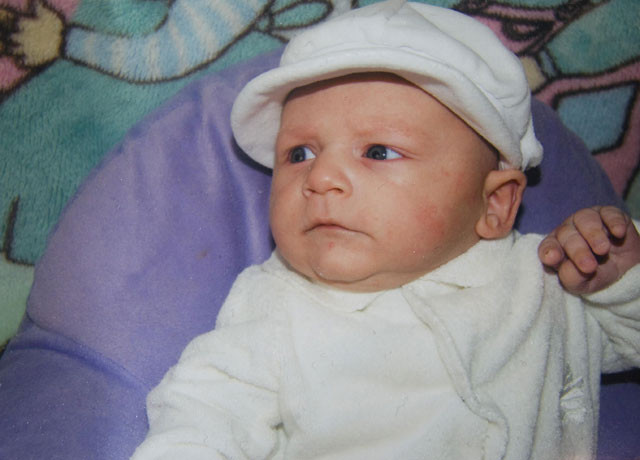
The baby’s parents want a tracheotomy performed on their son so they can take him off the respirator and bring him home to live his last days surrounded by family. The London hospital has refused to perform the procedure.
The couple’s lawyer, Mark Handelman, had hoped to be able to get Children’s Hospital of Michigan to accept a transfer, but the hospital decided against it. Handelman previously said the coupled hoped the Michigan hospital would provide “a second, completely independent medical opinion.” LifeNews
Monday, October 11, 2010
Why Do Black Patients Get Unwanted End-of-Life Care?
Why Do Black Patients Get Unwanted End-of-Life Care? – TIME Healthland: Researchers found that black and white patients tended to have end-of-life discussions with their doctors with equal frequency, yet black patients were less likely than whites to understand that their disease was terminal. Black patients also tended to ask for burdensome life-prolonging care more often than whites, and were less likely to have do-not-resuscitate (DNR) orders following discussions with caregivers. What's more, black patients with DNR orders were just as likely as black patients without DNR orders to receive life-prolonging end-of-life care.
Editor: Maybe it's what THEY want, not what YOU want.
Wednesday, August 11, 2010
The Cost of Dying: End-of-Life Care
The Cost of Dying: End-of-Life Care - 60 Minutes - CBS News: 'Often the best care is saying 'Let's see how you do on this particular treatment for a couple of days. And see if you respond.' Not necessarily doing a lot of tests,' Dr. Elliott Fisher, a researcher at the Dartmouth Institute for Health Policy, said. 'The best care may well be staying home with a trial of a new medication, rather than being admitted to a hospital where you can be exposed to a hospital-acquired infection. We have a system that rewards much, much more care.'
In almost every business, cost-conscious customers and consumers help keep prices down. But not with health care. That's because the customers and consumers who are receiving the care aren't the ones paying the bill.
By law, Medicare cannot reject any treatment based upon cost. It will pay $55,000 for patients with advanced breast cancer to receive the chemotherapy drug Avastin, even though it extends life only an average of a month and a half; it will pay $40,000 for a 93-year-old man with terminal cancer to get a surgically implanted defibrillator if he happens to have heart problems too.
After analyzing Medicare records for end-of-life treatment, Fisher is convinced that there is so much waste in the present system that if it were eliminated there would be no need to ration beneficial care to anyone. Multiple studies have concluded that most patients and their families are not even familiar with end-of-life options and things like living wills, home hospice and pain management.
In almost every business, cost-conscious customers and consumers help keep prices down. But not with health care. That's because the customers and consumers who are receiving the care aren't the ones paying the bill.
By law, Medicare cannot reject any treatment based upon cost. It will pay $55,000 for patients with advanced breast cancer to receive the chemotherapy drug Avastin, even though it extends life only an average of a month and a half; it will pay $40,000 for a 93-year-old man with terminal cancer to get a surgically implanted defibrillator if he happens to have heart problems too.
After analyzing Medicare records for end-of-life treatment, Fisher is convinced that there is so much waste in the present system that if it were eliminated there would be no need to ration beneficial care to anyone. Multiple studies have concluded that most patients and their families are not even familiar with end-of-life options and things like living wills, home hospice and pain management.
Friday, July 16, 2010
UK comes top on end of life care
The UK has one of the best systems for end of life care, a global study says. The analysis by the Economist Intelligence Unit looked at access to services, quality of care and public awareness in 40 countries. It found the UK performed particularly well on issues such as obtaining pain killers and quality of support. BBC
Thursday, June 24, 2010
Law affects end-of-life care
A new law goes into effect July 1 giving Idaho health care workers the right to refuse to provide end-of-life care they find morally objectionable. Some fear the legislation places the conscience of a caregiver ahead of a dying person's rights. CDA Press
Monday, June 21, 2010
Living wills' lack of specifics limits their usefulness
Living wills fail to capture patients' end-of-life care wishes because they do not ask about the real-life scenarios patients are likely to face as they get close to death, according to a new study. "This study points out that if you talk to people in more detail, there's more nuance to their decisions than just results from a simple question about what they want in a living will document," said Charles F. von Gunten, MD, PhD, editor-in-chief of the Journal of Palliative Medicine and provost of the Institute for Palliative Medicine at San Diego Hospice. The study is online and comes on the heels of previous research showing that living wills and other advance directives often do not explicitly cover the full spectrum of clinical realities patients face as they die. Am Med News
Editor: It is for this reason that Baptists for Life recommends naming a Durable Power of Attorney for Health Care. See our Protective Medical Decisions Declaration.
Editor: It is for this reason that Baptists for Life recommends naming a Durable Power of Attorney for Health Care. See our Protective Medical Decisions Declaration.
Decision to Pull Plug on Gary Coleman Contradicted Living Will
Former Diff'rent Strokes star Gary Coleman's ex-wife decided to "pull the plug" on her husband after a head injury, contradicting his desires as expressed in a living will signed several years earlier, according to reports. LifeSiteNews
Subscribe to:
Posts (Atom)